

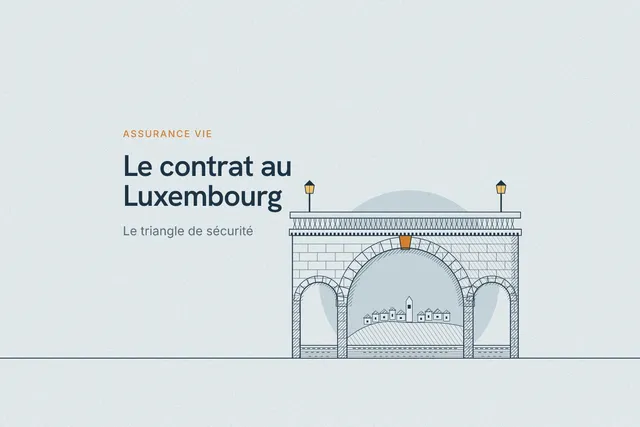
ASSURANCE VIE
Assurance vie luxembourgeoise : triangle de sécurité et FIC
Triangle de sécurité, Fonds Interne Collectif à la place du fonds en euros, fiscalité, formulaire 3916 : le contrat AFI ESCA Luxembourg conforme via 570easi.
15 min
In our previous look at the "Rogue Banker," we saw how traditional debt-based finance is like a complicated, explosion-prone engine. But nowhere is this more obvious than in the 2008 housing crash.
To understand the difference, let’s go back to our village of bakers.
Imagine two identical houses on the same street.
The buyer, David, took a loan where the bank was a "lender," not an owner. The bank didn't care if the house was actually worth what David paid; they just wanted their monthly interest. When the market crashed and the house value dropped by 30%, David’s debt didn't shrink. He was "underwater"—owing $300k on a house worth $200k.
The bank, facing its own "engine failure" (liquidity crisis), didn't help. They foreclosed. David lost his home, the bank sold it for a loss, and the whole street’s value plummeted. The engine exploded.
Across the street, Fatima bought her home through a Diminishing Musharakah partnership. 570easi (the partner) and Fatima bought the house together.
Fatima lived in the house and paid "rent" to the partner for the 80% she didn't yet own. Each month, she also bought a tiny bit more of the partner's share.
When the 2008-style crash hit House B, the "Electric" system handled the shock completely differently:
Research from the IMF following the 2008 crisis found that Islamic financial institutions were often more resilient precisely because they couldn't participate in the "Ghost Economy."
The 2008 crash was caused by the "Internal Combustion" of finance—too much pressure (debt) in too small a cylinder (the housing market). When it exploded, it took the whole neighborhood with it.
The "Electric" model of 570easi is built for the long haul. It doesn't rely on explosions; it relies on steady, shared growth. It’s quieter, it’s fairer, and as 2008 proved, it’s a lot harder to break.
Découvrez nos guides complets et articles pour approfondir vos connaissances sur l'épargne et l'investissement éthique.
Triangle de sécurité, Fonds Interne Collectif à la place du fonds en euros, fiscalité, formulaire 3916 : le contrat AFI ESCA Luxembourg conforme via 570easi.
Mufti Taqi Usmani, à Londres : changer la mentalité. Ce que cela exige : revenir au commerce réel, partager le risque, financer l'échange plutôt que la dette.
Intérêt fixé par l'État, capital rendu à l'euro près : le Livret A est du riba. Taux 2026, où va l'argent, que faire des intérêts perçus, fermer, alternatives.