From US Crotonville to KSA Jeddah What Two Leadership Schools, 25 Years Apart, Taught Me About Leading
I have now sat through two leadership educations that could not, on the surface, be more different.
The first was at General Electric's Crotonville campus, roughly twenty-five years ago, when I earned my Six Sigma Black Belt and went through GE's famous leadership curriculum (I started my professional career in March 2009 with GE Europe). It was rigorous, quantitative, and unsentimental. Define the problem. Measure it. Find the root cause. Improve the process. Control it so it stays improved. Leadership, in that world, was a discipline you could audit.

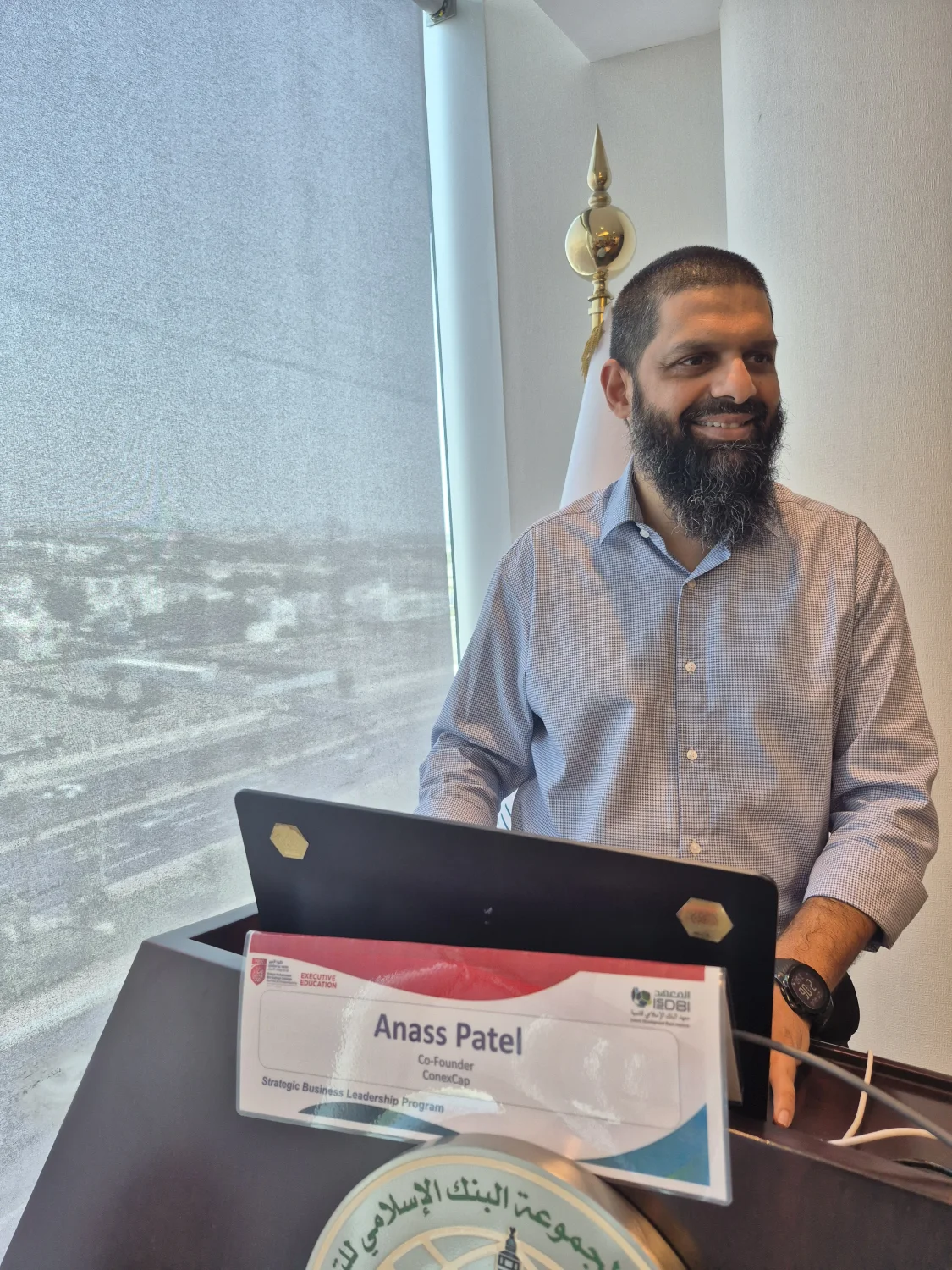
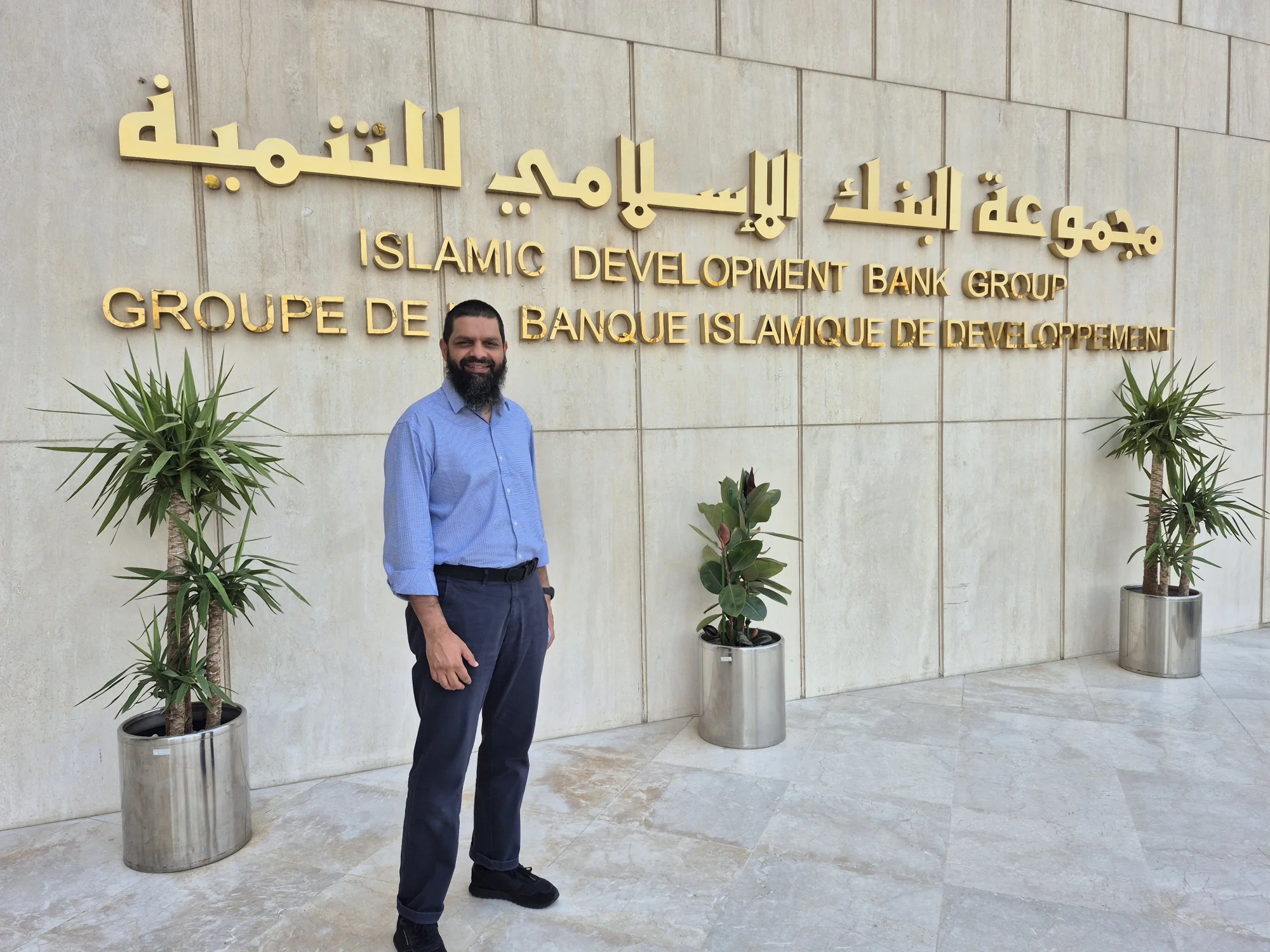
The second was this summer 2026, in Jeddah, at the Strategic Business Leadership Programme jointly run by the Islamic Development Bank Institute (IsDBI) and Prince Mohammed Bin Salman College of Business & Entrepreneurship (MBSC). Thirty participants, fifteen IsDB member countries - Nigeria, Saudi Arabia, Pakistan, Yemen, Kazakhstan, Uzbekistan, Indonesia, Morocco, Egypt, Ghana, Bangladesh, Niger, Somalia, Kenya, La Réunion (Indian Ocean communities) - in one room for a programme that had almost nothing to do with process control and everything to do with the person doing the leading.
I did not expect these two experiences to speak to each other. They did, and the conversation between them is worth writing down.
What Six Sigma gave me
Crotonville did not teach me about character. It taught me about rigor. DMAIC - Define, Measure, Analyze, Improve, Control - is a way of refusing to let a problem hide behind opinion or hierarchy. You measure. You let the data argue with you. If a process is broken, you fix the process, not just the person operating it.
That discipline has stayed with me through fifteen years of building 570easi from a single-product Murabaha into a diversified Islamic finance platform now serving thousands of clients and having facilitated more than €800 million in financing. Every time I have had to strip a product down to its structural essentials, or push a team to stop debating and start measuring, that Six Sigma training has been underneath it.
But it had a limit, and I only fully understood the limit in Jeddah.
The conversation point
The session that has stayed with me longest came from Professor Farzad Khan. He introduced a simple but powerful way of thinking about conversations across cultures and civilisations: a matrix built on two questions - how much local language and worldview do the two sides already share, and how much of the conversation happens in shared versus foreign terms? The result is four possible spaces - No-speak, Same-speak, Us-speak, Other-speak - with a "good conversation point" at the centre, the space where meaningful dialogue actually becomes possible.
Thirty leaders from fifteen countries in one room, each carrying a different local worldview, made that abstraction concrete: the value of the cohort wasn't that we agreed. It was that we had thirty different chances to practise finding that good conversation point.
A conversation that reframed my own region
One of those conversations, with Madina Tukulova - who leads Islamic finance regulation in Kazakhstan - did exactly that. She works at the intersection of a CIS regulatory tradition and a conventional financial system, trying to open an entire region to Islamic finance without the luxury of a pre-existing ecosystem to lean on. Listening to how she thinks about credibility and gradual openness in a market with no inherited trust in the industry reframed how I think about 570easi's own position in France: we sometimes assume our biggest obstacle is regulatory. Her experience was a reminder that the harder, slower work is building a shared worldview with regulators and the public before the regulation itself can move.
The secure base I wish I'd had
Another concept from Professor Muhammad Azam Roomi's sessions landed less as a new idea than as a diagnosis: the "secure base," the understanding that people take risks, raise objections, and propose unconventional ideas only when they feel safe enough to do so, and that a leader's job is to provide that safety while still expecting people to stretch.
Straight into the action plan
I wish I had known this concept years ago - for my team, and honestly for how I show up with family as well. I already have two or three people on the team I want to deliberately practise this with, rather than treating "secure base" as one more idea I nodded along to in a workshop.
Where my own background read the room differently
The decision-making exercises Professor Zeger Degraeve ran were built to expose the cohort's blind spots, and I noticed mine surfacing differently than some of my classmates'. One exercise centred on a risky bet, testing how well we could appreciate the risk elements at play and, more precisely, distinguish risk from uncertainty. That distinction is not a side note in Islamic commercial law - it sits close to its centre, in the line fiqh al-muʿāmalāt draws between legitimate risk-taking and the kind of excessive, structurally embedded uncertainty (gharar) that a contract is not allowed to carry. Where the exercise itself asked us to reason in terms of probability, I found myself instinctively adding a second question most of my roommates weren't asking: not just how likely, but whether this was even the right kind of uncertainty for a contract to hold. It was a useful reminder that the frameworks we bring into a room are never neutral; they are shaped by the traditions we come from, for better and for worse.
Where the two systems meet
I have spent much of the last few years building a personal Leadership Protocol - a tailored framework that tries to root professional leadership in Islamic epistemological foundations rather than importing external management vocabulary and adding an ethical veneer on top. Jeddah was, in a sense, a stress test of that instinct. It confirmed something I had suspected: process discipline and ethical foundation are not competing systems. They are answers to two different questions.
Six Sigma tells you how to fix what's broken. A tradition that takes character and accountability before God seriously tells you why it matters that you fix it honestly, and what you owe the people affected while you do.
What changes now
Concretely, this is pushing me to make emotional intelligence more central - not as a soft add-on, but as the actual starting point - in how I lead at Conexcap and in how I teach at different international universities or ethical institutes. I want to move from head to heart, with concrete examples drawn from the sīra of the Prophet ﷺ, rather than only from case studies borrowed from conventional business schools. If the Prophet ﷺ himself led that way, it should not need a Harvard case to justify it to a room of Muslim professionals.
The question I brought home
My own long-standing conviction is that Islamic finance has under-delivered as a civilizational project largely because it mimicked conventional finance's structures instead of building its own. Jeddah sharpened that conviction into a sharper question:
What can we relearn from the root sources of how business was actually done during Islam's own growth phase - when merchants carried the faith into new markets not through conquest or capital, but because they were known, market after market, as Ameen and Siddiq: trusted and truthful?
With equity and profit sharing structures such as Mudaraba and not debt centric solutions.
Twenty-five years ago, GE taught me to manage a 6 sigma process (3.4 ppm). This year, IsDBI and MBSC reminded me that before you can lead an institution - or, for that matter, a village - you have to learn to lead yourself.
I arrived in Jeddah expecting a leadership programme. I left with a sharper version of a question I will be working on for the rest of my career... starting with an EdTech initiative building on my 15 years of experiences in Fintech.